


In October 2024, Cornell banned four students from campus for three years for participating in a pro-Palestinian protest. A university official said the students were suspended for having “disrupted university operations as part of a protest that shut down the Sept. 18 career fair.” Three of those students were also arrested, adding to the group of 24 Cornell co-eds who’d been arrested a few months earlier for their involvement in a campus sit-in against the genocide in Gaza.
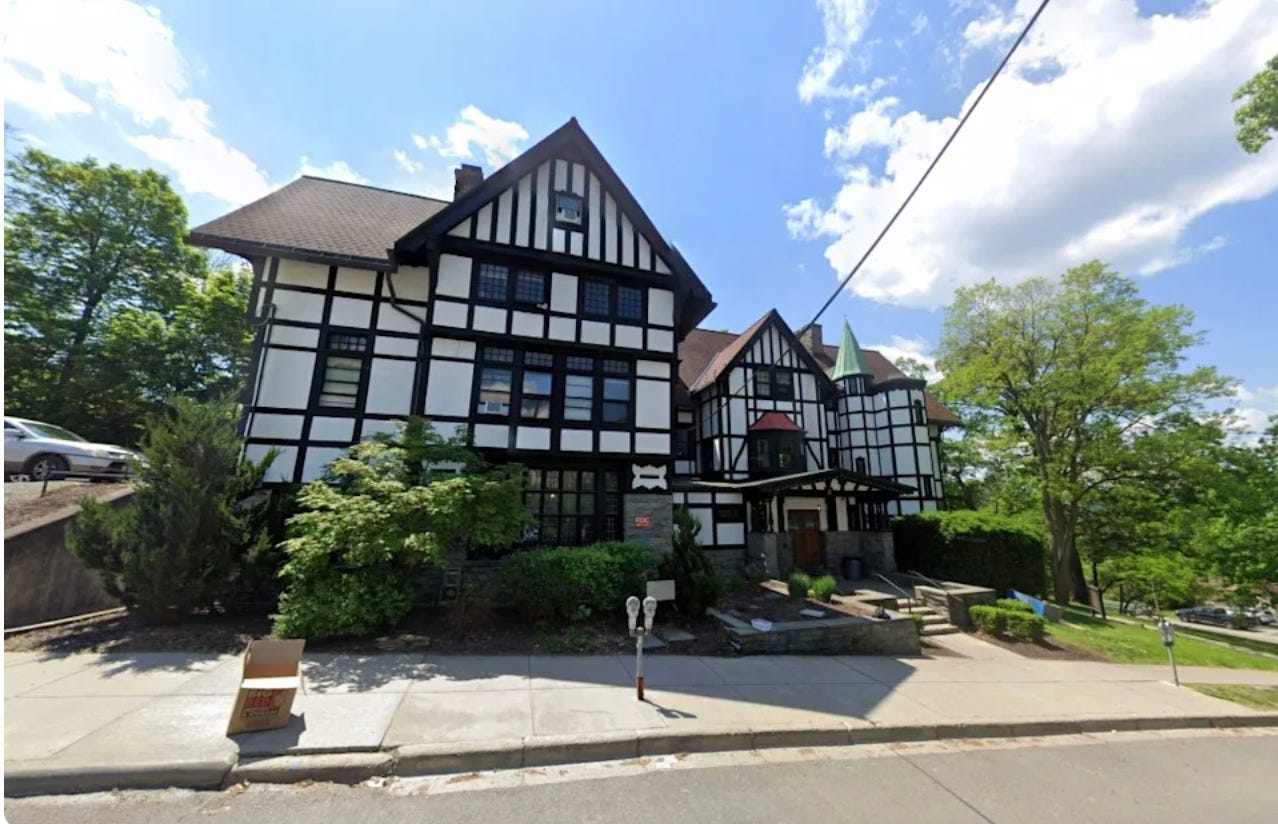
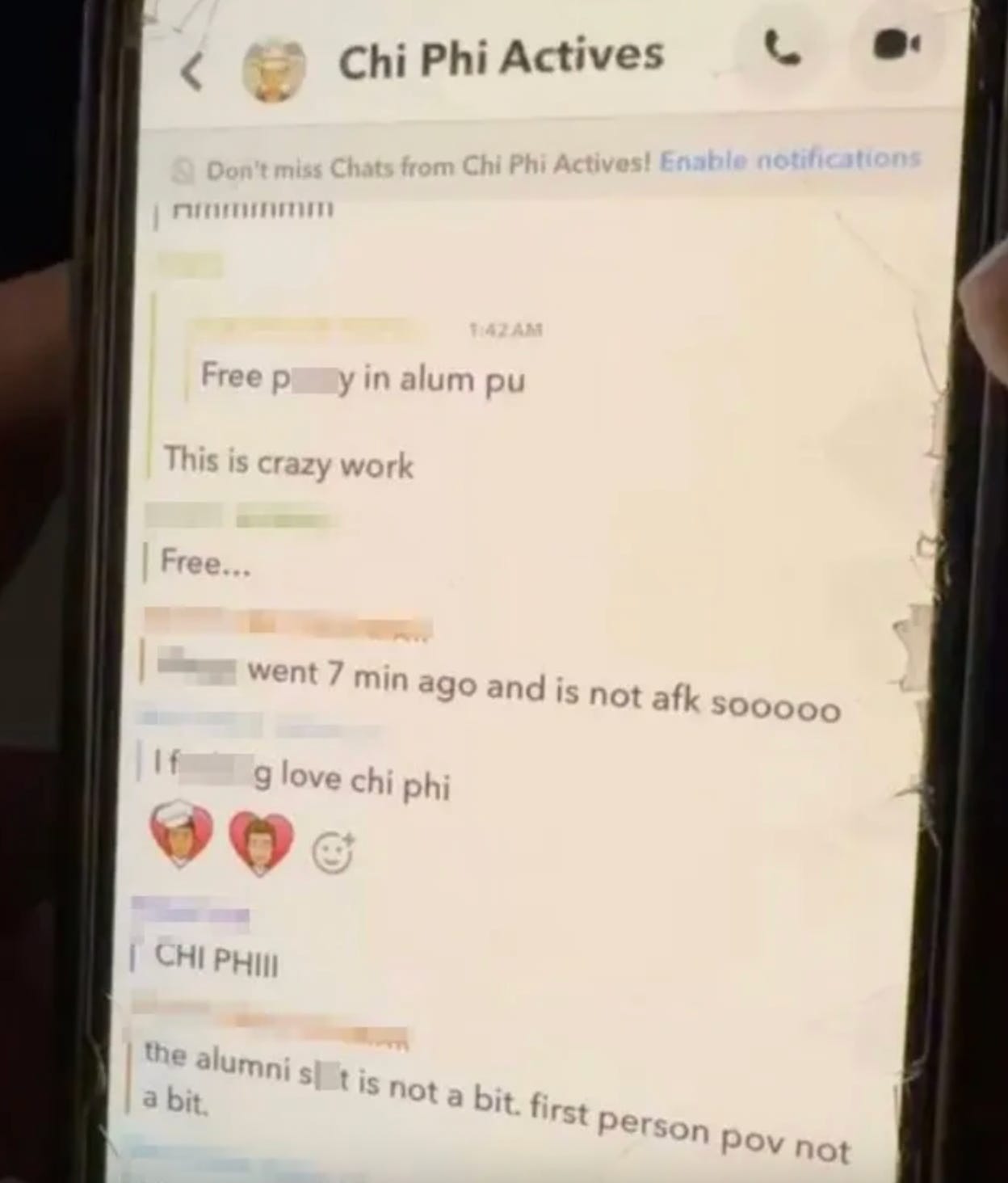
That same October, a then-20-year-old Cornell student reported that she had been drugged and gang raped by seven men at a fraternity house. The young woman, who remains an anonymous Jane Doe, told campus police that a group of Chi Phis had plied her with ketamine, rum, and marijuana for seven hours and taken turns raping her and doing drugs off her body while she tried to hide under a sheet. One of the men, per a screenshot in her civil lawsuit, invited more frat brothers to come sexually assault the incapacitated woman by texting a group called Chi Phi Actives that there was “free pussy” upstairs.
Police at the time closed the investigation with no criminal charges, citing a lack of evidence. The local district attorney’s office, relying only on the campus police investigation, did not pursue the case at all. The school did ultimately expel two of the alleged rapists after a Title IX investigation, but the five others were offered a chance to “mitigate their conduct by submitting essays” and attending workshops, per the civil complaint. Jane Doe dropped out of Cornell to pick up the pieces.
Two years later, New York prosecutors are finally reopening the criminal case against the seven men—only because Jane Doe filed a new civil lawsuit that sparked massive public outcry. Tompkins County District Attorney Matthew Van Houten said he didn’t have the screenshot of the Chi Phi group text the first time around and that the evidence then was too scant to spur an investigation. “We want to reexamine whether there's additional evidence that we were not aware of in November of 2024, that exists now that would change our assessment of the case and would result in the grand jury finding that there was criminal conduct,” he told ABC News.
In reality, campus rape has never been considered a serious crime in the United States, where one in four women experiencing some kind of sexual assault at school. No amount of trauma and violence on a young woman can ever justify ruining a promising young man’s career and future in the eyes of a school administrator, a district attorney’s office, or presiding judge. Rape is only actually really considered rape in the general imagination if it’s committed by an immigrant or a stranger on a jogging path; certainly not by a young Ivy League Chi Phi against a young woman who’d also been drinking. The only way to get a prosecutor to give a shit about a gang rape on campus, it seems, is to splash the literal screenshot of evidence that it happened across social media and newspapers and build a national pressure campaign against the people that wanted to let it go. The American people have to force the justice system to care.
What’s worse is that we know now that if these seven men had painted signs and sat with their peers in a campus building demonstrating against genocide, they would have faced harsher legal consequences than they received from allegedly drugging and gang-raping a woman. You can perpetrate violence as a young American man, but you can’t protest it.
“You can perpetrate violence as a young American man, but you can’t protest it” is god tier quote. id like to see much harsher actions against greek houses when their member’s culture gets to this level of depravity, say five year ban to purge every member. but the truth is these ivy league schools have no teeth and are beholden to alumni ($$), let’s hope the DA does their job